KEY TAKEAWAY
Choose the membrane system and supporting equipment for the actual feed conditions and household demand, then confirm installation and care.
Start with the feed water and intended use
Identify whether the RO purifier will serve drinking and cooking water at a dedicated tap. Record the incoming supply and existing treatment, and share relevant water results. The proposed unit must be suitable for its feed-water conditions.
A TDS reading is one measurement; it does not establish microbiological safety or identify every constituent. Describe the concern so the relevant information can be reviewed instead of choosing a system only to reach an arbitrary meter number.
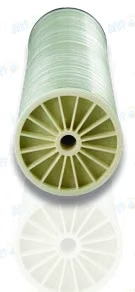
Read the membrane and component specification
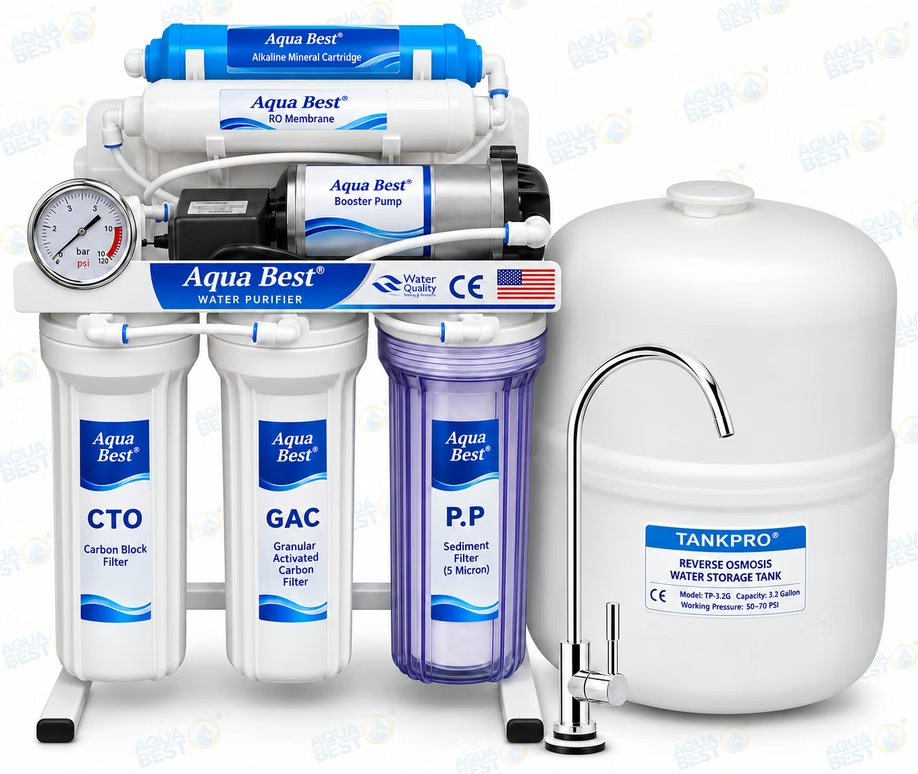
Compare the actual membrane, prefilters, storage and any post-treatment or UV stage in the quoted configuration. Ask for the replacement codes and the model’s operating requirements. Stage count alone does not tell you how the system will perform.
A nominal membrane rating is tied to stated conditions. Feed temperature, pressure, water composition and the complete system arrangement can affect production at your property.
Balance output and storage with household use
Describe the number of users and periods when drinking or cooking water is needed together. Discuss how storage and delivery at the tap will meet those periods rather than selecting solely from a daily-output label.
Ask how the chosen system handles its product water and reject stream. Confirm the drainage arrangement and review the model’s stated operating data with the supplier.
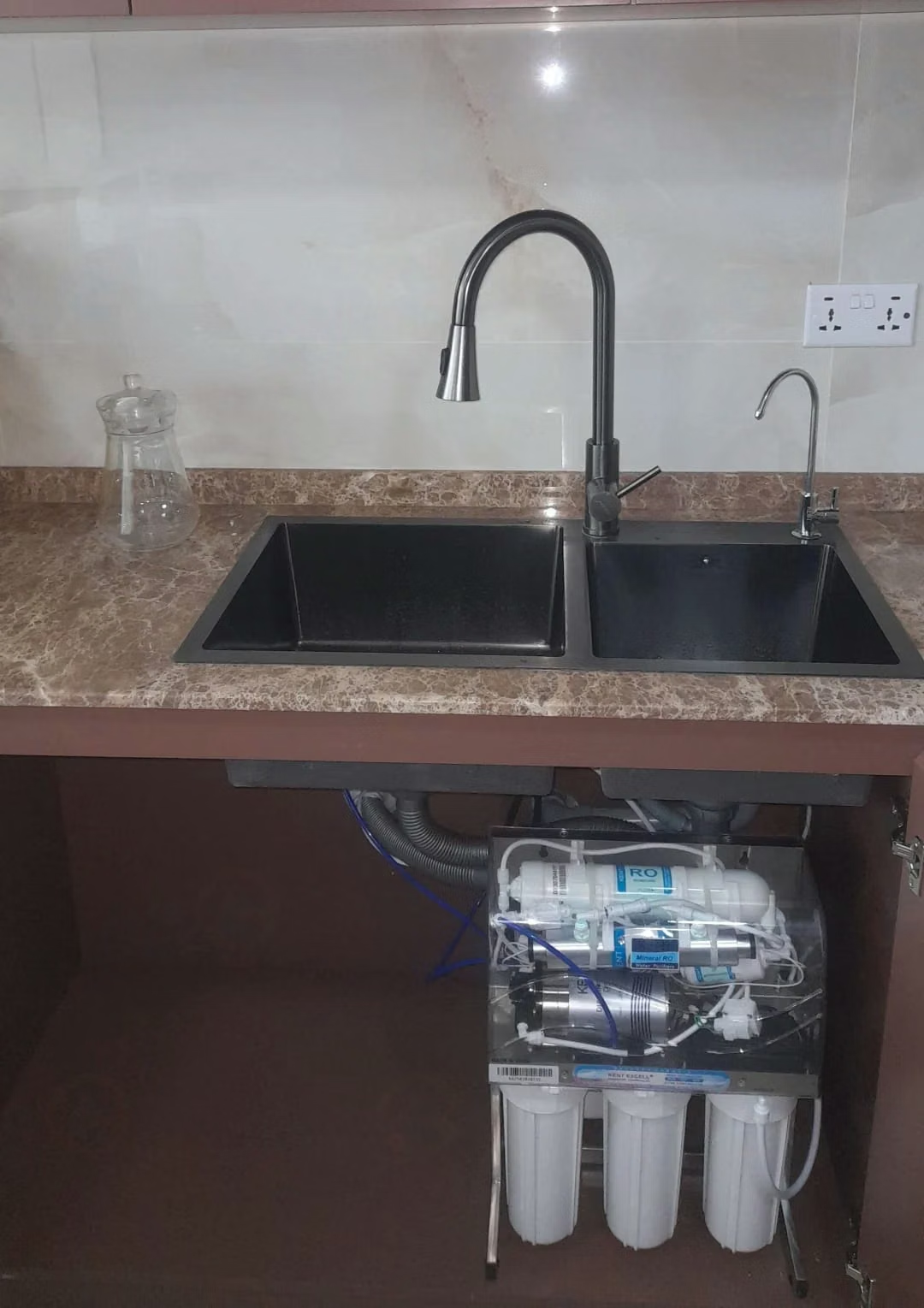
Check the under-sink installation
Measure the cabinet and photograph the feed, waste connection and intended tap. Include any available power supply needed by the model. Allow working space around the filters, tank and other components for servicing.
Clarify the building or landlord arrangements for the work and who provides additional fittings. A complete equipment list is not the same as a confirmed installation scope.
Plan service before the first filter change
Keep the installation record, exact model and cartridge codes. Follow the equipment’s instructions and investigate changes in flow, pressure or readings with the service team. A fixed calendar rule does not suit every membrane and feed-water condition.
- System model and membrane identification.
- Relevant feed-water information and intended outlet.
- Household demand and busiest periods.
- Cabinet, tap, feed, drain and power details.
- Replacement items and maintenance scope.
Example: a nominal rating and a busy kitchen
A household may use little water for much of the day and then need several draws while cooking. The daily membrane label alone does not describe delivery at that busy period. Storage and the complete operating arrangement should be part of the review.
Explain when the water is needed and which outlet will be used. Ask the supplier to relate the proposed system to that pattern, its feed conditions and the cabinet available. This avoids treating a higher nominal membrane rating as an automatic solution to every production, storage or tap-flow concern.
Request the right RO proposal
Send your Dubai location, water information and installation photographs with the intended use. Ask for the selected system, connections, commissioning and ongoing care to be itemised in the quotation.
If the requirement is a full property or a larger business, review the relevant whole-house or commercial range rather than extending a domestic purifier beyond its specified application.