Brackish water
What is brackish water?
Brackish water holds more dissolved salts and minerals than freshwater, but generally less salinity than seawater. It can occur naturally in groundwater, wells, coastal areas and places where freshwater meets saline sources. Because of this, it may need specialised treatment before it suits drinking, industrial processes or other uses.
Aqua Best supplies brackish water reverse osmosis (BWRO) systems across Dubai and the UAE, in different capacities, configured around your feed-water quality, required flow and treated-water needs. Salt levels vary a lot from source to source, so water testing matters before choosing a system.
It may contain dissolved
- Sodium
- Potassium
- Calcium
- Magnesium
- Chloride
- Sulfate
- Bicarbonate
- Carbonate
- Nitrate
How RO helps
Brackish water RO systems
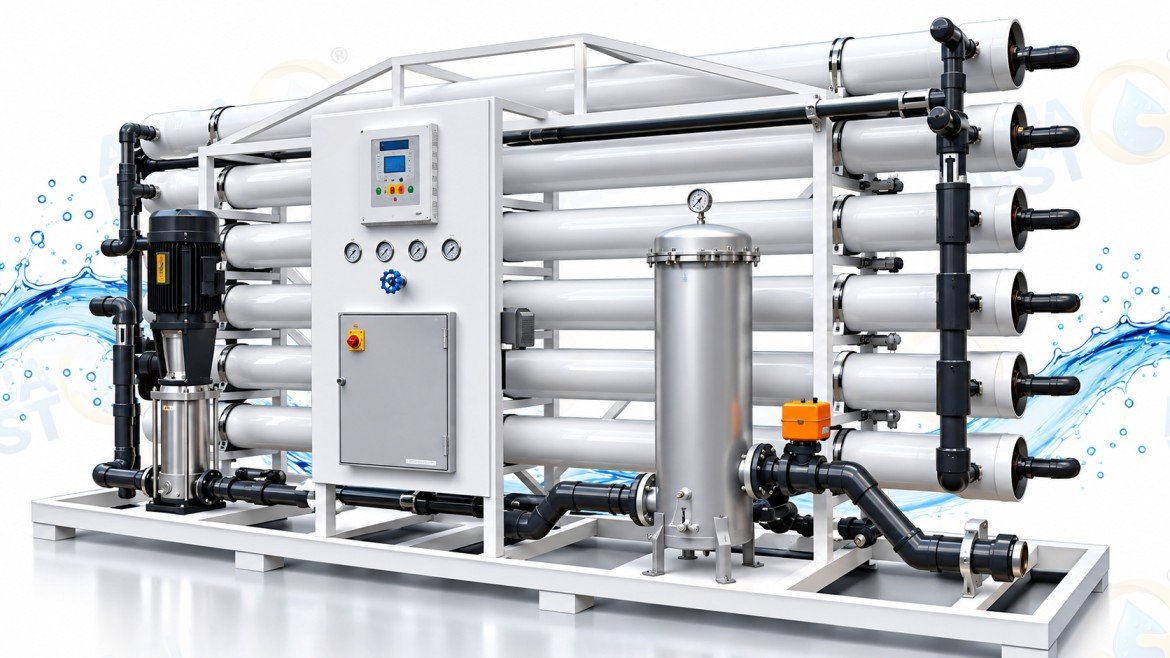
Reverse osmosis is widely used to reduce dissolved salts and other dissolved substances in brackish water. A BWRO system pushes feed water through specialised RO membranes under pressure. The membranes let water through while holding back a large share of dissolved salts and other substances.
Every commercial or industrial installation should be designed around the actual feed-water conditions.
Final water quality depends on
- Feed-water TDS
- Water temperature
- Feed pressure
- Membrane type
- Recovery rate
- System configuration
- Pretreatment quality
Understanding salinity
How many ppm is brackish water?
Brackish water sits between freshwater and seawater. In technical terms it holds roughly 500 to 30,000 ppm of dissolved salt, which is about 0.05% to 3.0%. Because it is less salty than seawater, it generally needs less treatment to become drinkable.
The salt in brackish water is not only sodium chloride. It can also include potassium, calcium, magnesium, chloride, sulfate, bicarbonate, carbonate and nitrate, which is why a proper water test comes first.
How salinity is measured
- TDS (total dissolved solids): found by evaporating a water sample and weighing what is left. It is the more accurate method.
- EC (electrical conductivity): measures how easily electric current passes through the water. It is quicker and more convenient, but less accurate.
Why it matters
Brackish water is worth treating
Where it comes from
It forms where surface water or groundwater mixes with seawater, in deep ancient aquifers, and where salt slowly dissolves from mineral deposits as rain soaks into the ground.
Why it is a problem
Left untreated, it can damage equipment, so most industries cannot use it. It is also not suitable for people or livestock to drink.
Why treat it now
Desalination has become more affordable and freshwater supplies are under pressure. Brackish water is much easier to desalinate than seawater, so it is a practical source.
Near coasts, wells that draw from groundwater can pull in seawater, a problem known as saltwater intrusion. Roughly half of the world's population lives within 200 km of a coastline, so this is a worldwide concern.
Capacities
Available brackish water RO plant capacities
The right capacity depends on your daily water requirement, feed-water quality and required operating flow. Tap a size to ask about it on WhatsApp.
Commercial & industrial
Where brackish water RO is used
Brackish water turns up in groundwater, wells and areas affected by natural or coastal salinity. For commercial and industrial sites, treating it can make the water suit specific applications. The treatment needed depends on the source water and what the treated water is for.
Brackish groundwater and saltwater intrusion
Deeper groundwater can have higher salinity, and coastal groundwater can be affected when saline water enters freshwater aquifers, raising TDS. A properly designed RO system can be a practical option where no suitable freshwater source exists. Always carry out a water analysis first, and choose the system by the full analysis, not TDS alone.
Applications
- Industrial water treatment
- Commercial water supply
- Process water
- Groundwater treatment
- Well-water treatment
- Irrigation applications
- Hospitality facilities
- Manufacturing facilities
- Municipal and infrastructure projects
The process
How brackish water RO works
A typical BWRO system has treatment stages before and after the RO membranes.
1. Pretreatment
Protects the membranes by reducing sediment, suspended solids, chlorine and other things that can hurt performance. Depending on the feed water it may include:
- Sediment filtration
- Multimedia filtration
- Activated carbon
- Water softening
- Cartridge filtration
- Chemical dosing
2. High-pressure RO
Pretreated water is pressurised and passed through the RO membranes, which split it into two streams:
- Permeate: treated water that passes through
- Concentrate: water with a higher concentration of rejected dissolved substances
3. Post-treatment
Depending on the final use, extra treatment may follow the RO stage. It is chosen to match the water quality you need and how the water will be used.
Packaged solution
Containerized brackish water RO systems
For sites that need a packaged, ready-to-install solution, we also supply containerized systems built in new 20-foot and 40-foot containers, with pretreatment, pumps, piping and controls included.
They can be considered for municipalities, manufacturing facilities, resorts, construction projects and other large-scale water-treatment needs.
Benefits of a containerized system
- Compact packaged design
- Equipment protected inside the container
- Easier transport to suitable sites
- Integrated piping and equipment
- Suits temporary or permanent installations
- Practical for remote or space-limited sites
Why Aqua Best
Why choose Aqua Best for brackish water RO?
Many capacities
From smaller 1,500 GPD systems to 100,000 GPD plants.
Application-based design
Chosen by feed-water quality, daily production needs and how the treated water will be used.
Complete solutions
Pretreatment and supporting equipment such as filters, dosing systems and softeners.
Install and support
Installation, commissioning and ongoing maintenance.
UAE-wide service
Water-treatment solutions across Dubai and the other Emirates.
After the sale
Brackish water RO maintenance
Keep operating readings, the feed-water analysis, equipment schedule and service history with the plant. Inspection and cleaning requirements depend on the membranes, pretreatment and actual operation; a TDS reading alone does not define the maintenance work.
For an existing BWRO plant, send the model, output requirement, operating symptoms and recent records. A treatment maintenance quotation should state the equipment covered, visits, consumables and any separately assessed cleaning or repair work.
Maintenance may include
- Checking feed-water pressure
- Inspecting pretreatment filters
- Replacing cartridge filters
- Checking RO membrane performance
- Monitoring TDS and conductivity
- Inspecting pumps and valves
- Checking chemical dosing systems
- Cleaning RO membranes when required
- Inspecting electrical and control components
Get a brackish water RO system in Dubai
BWRO systems for commercial, industrial and specialised uses, with capacities designed around your water. Call or WhatsApp +971 52 992 0566, landline 04 285 1510.
Brackish water RO questions
How many ppm is brackish water?
Brackish water holds roughly 500 to 30,000 ppm of dissolved salt, about 0.05% to 3.0%. That is more than freshwater but less than seawater, which is why it generally needs less treatment than seawater to become drinkable.
What is a brackish water RO system?
A reverse osmosis system designed to treat water with elevated levels of dissolved salts and minerals.
Brackish water or seawater: what is the difference?
Brackish water generally has lower salinity than seawater. Both can use RO, but the equipment and operating requirements must suit the actual analysis. Aqua Best also offers seawater RO desalination systems; request a seawater-specific proposal rather than assuming a BWRO rating covers the same duty.
Can it treat well water?
Yes, for suitable groundwater and well-water uses, provided the system is designed around the actual water analysis.
How do I choose the right capacity?
It depends on your daily water demand, operating hours, feed-water quality and required production rate. We can recommend a capacity after reviewing your requirements.
Do I need water testing first?
Yes. Water analysis is strongly recommended because the feed-water composition decides the pretreatment, membrane selection and overall design.
Can you supply a containerized RO system?
Yes, in different configurations, including systems for larger commercial and industrial applications.
How often does it need maintenance?
It depends on feed-water quality, operating hours and configuration. Regular monitoring shows when filters, membranes and other parts need service.
Do you install and maintain in the UAE?
Yes. We provide installation, commissioning and maintenance across Dubai and the UAE.
Which areas do you cover?
Dubai, Abu Dhabi, Sharjah, Ajman, Ras Al Khaimah, Fujairah, Umm Al Quwain and Al Ain.
What information is needed for a high TDS water-treatment quotation?
Provide a water analysis, source details, required product-water quality, daily output and operating hours. Include site utilities, space and concentrate-handling arrangements so the proposed BWRO scope can be reviewed.
Can I compare a skid plant with a containerized brackish-water plant?
Yes. Compare the treatment duty and site requirements as well as the enclosure. The containerized RO guide explains access, connections and deployment questions to include in the enquiry.