KEY TAKEAWAY
Identify the concern first. Filtration, softening and drinking-water RO are selected for different treatment functions.
Name the problem before naming the product
Describe what is happening and where: visible particles, a taste concern, measured hardness or a defined water-quality requirement. Record the source, relevant test results and any treatment already installed.
The word filter covers many products. Two devices described that way can have different purposes, so the equipment’s exact performance and operating conditions matter.
Understand what filtration means for the selected model
A sediment cartridge targets suspended particles within its rating. A carbon stage may address specified taste, odour or chlorine-reduction requirements. The exact claims and service limits need confirmation for the model.
Neither the appearance of a cartridge nor the number of stages proves that every dissolved constituent is removed. Read the documented function instead of assuming a universal result.
Understand the softening task
A softener is selected for hardness management, using a hardness result and a flow assessment. Its installation and operating needs differ from a simple cartridge housing.
Discuss regeneration, service access and ongoing care for the actual equipment. A TDS number is not a substitute for a hardness result when preparing that requirement.
Compare the functions in a household example
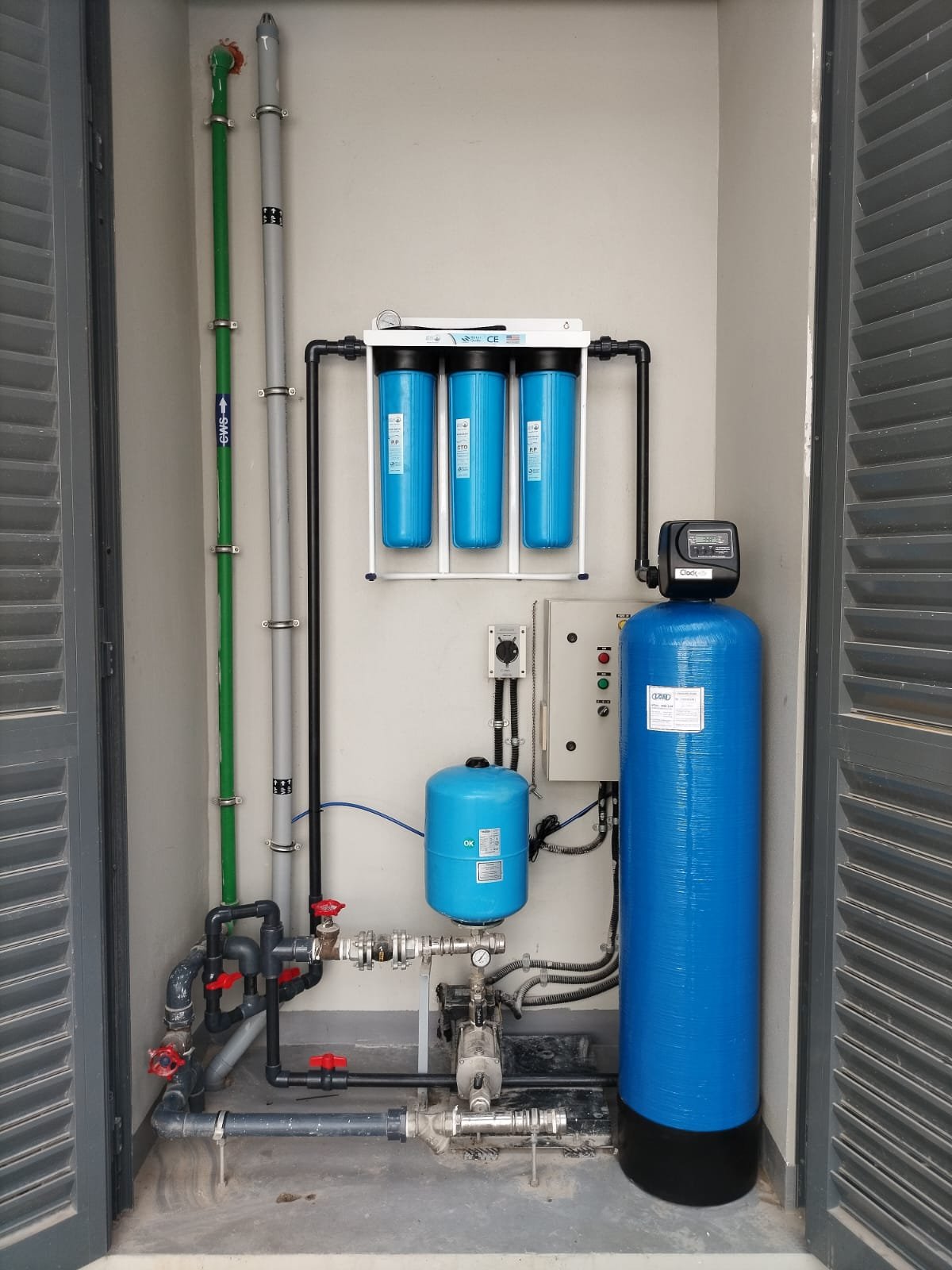
A villa may have a particle-filtration requirement at the inlet and a separate hardness requirement for connected outlets. Its kitchen drinking-water requirement may call for another assessment and selected point-of-use equipment.
| Requirement | Equipment to review | Information to supply |
|---|---|---|
| Suspended particles | Suitable sediment filtration | Feed conditions and required flow |
| Documented taste or chlorine concern | A model with the relevant reduction claim | Water information and intended outlet |
| Measured hardness | Appropriate softening equipment | Hardness result, flow and layout |
| Dedicated kitchen treatment | Suitable home purifier configuration | Water assessment and installation details |
Decide whether stages should be combined
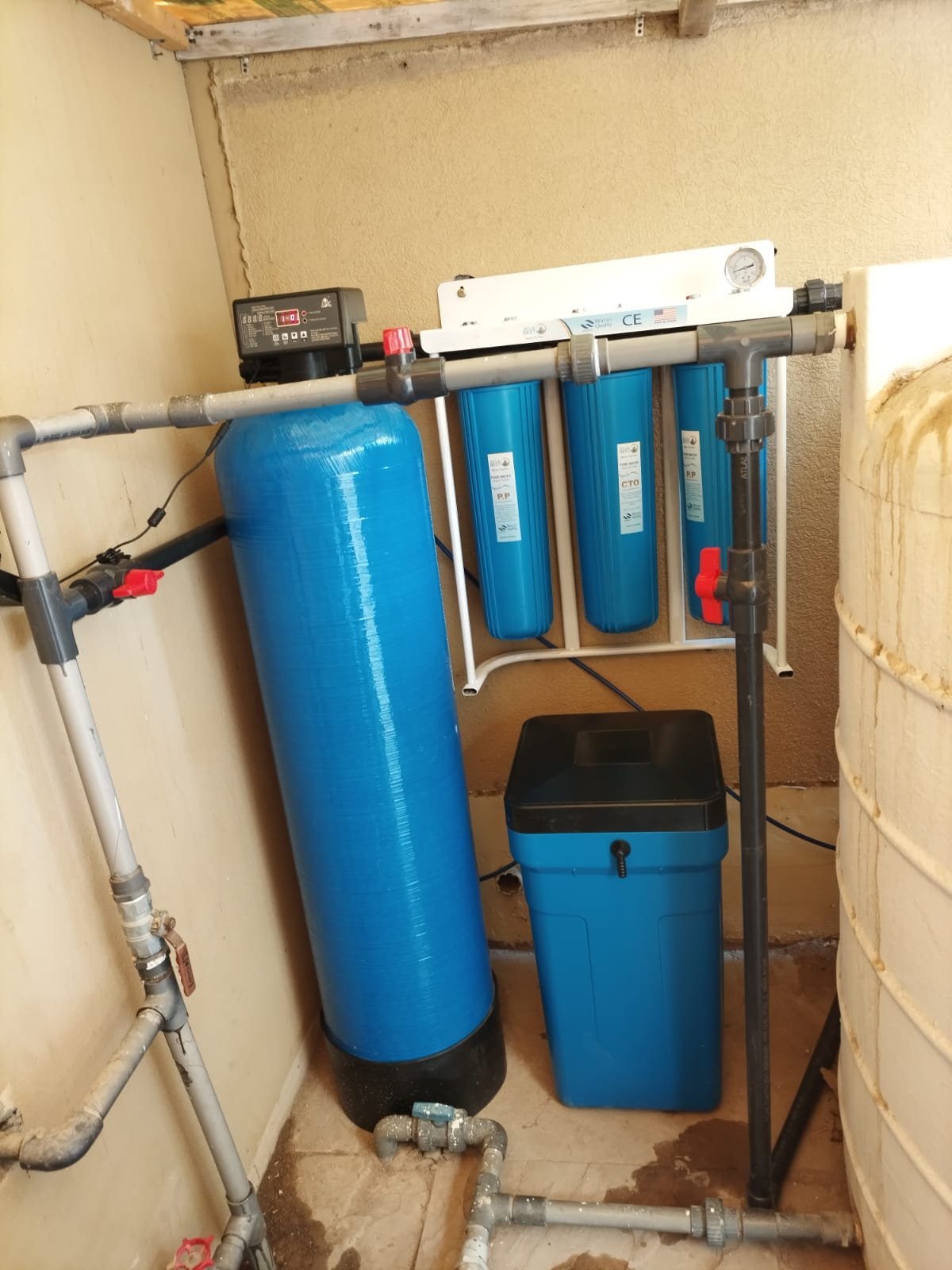
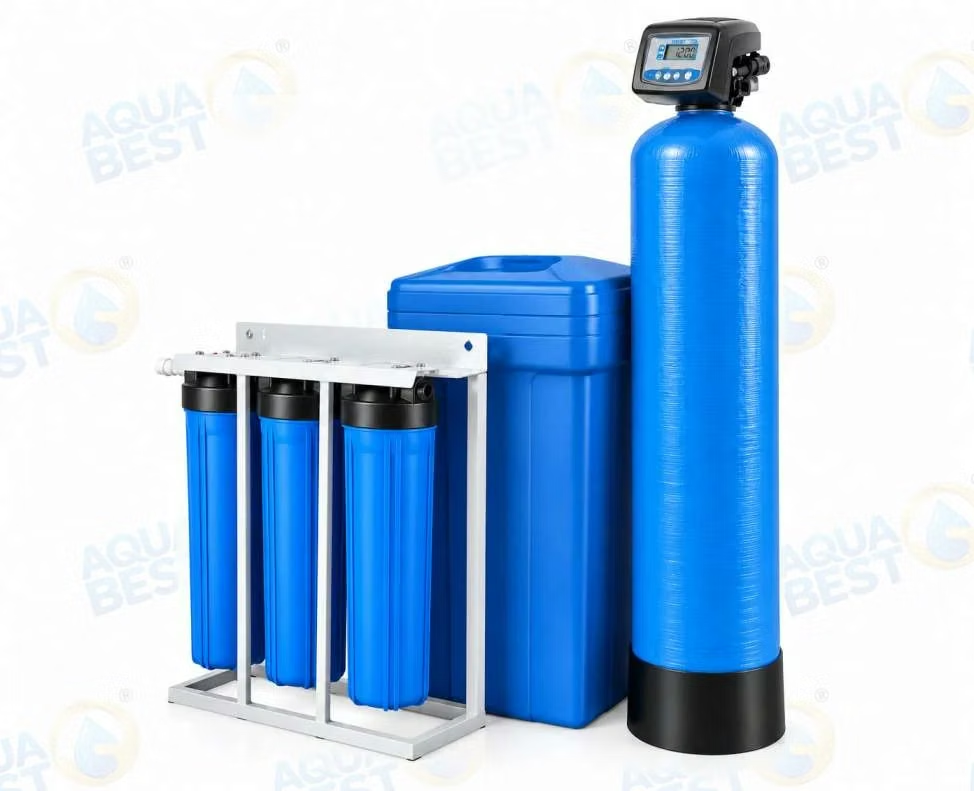
A proposal can include more than one treatment function where the application calls for it. Ask the provider to explain the purpose, position and outlets served by each stage.
Compare a combined package by its individual tasks, installation and maintenance. More components do not automatically mean better suitability, and a separate building or tank issue still needs investigation.
Example: sediment and hardness in one treatment plan
Where the reviewed information identifies two different tasks, ask the proposal to describe each stage separately. The filter should have a stated filtration purpose, and any softener should be selected from the relevant hardness and flow information.
Record which outlets the arrangement serves and the maintenance for each component. If a kitchen purifier is proposed as well, identify its separate drinking-water duty. A clear drawing and itemised scope make it easier to assess a combined installation without assuming that all of its components perform the same function.
Prepare a clear comparison enquiry
Send the water information, observations and property layout to Aqua Best. The team can review the requirement and quote the selected equipment and work.
- Concern and affected outlets.
- Water source and relevant results.
- Existing filters, purifier or softener.
- Peak use, space and connections.
- Required equipment, installation and ongoing care.
Sources and further reading
Sources checked 17 Nov 2026. Advice for a specific property requires its own water information.