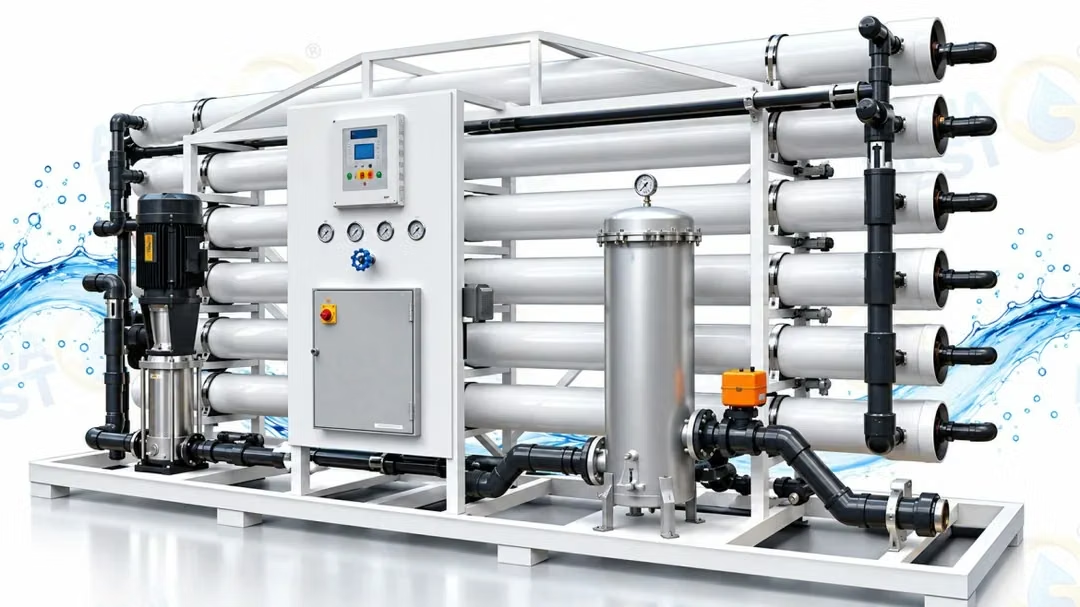
KEY TAKEAWAY
Brackish-water treatment needs a feed-specific assessment. The source label alone does not define the membrane, pretreatment or operating arrangement.
Characterise the actual source
Identify the well, supply or other source and provide a relevant analysis with its sampling point and date. Explain any expected seasonal or operational variation. A general description of salty water is not a sufficient design basis.
Record existing treatment and the conditions at the proposed RO feed point. The water reaching the plant may differ from the original source if storage or pretreatment is involved.
Define the treated-water application
State where the product water will be used and any quality requirement of that application. Record the production volume, operating hours and peak delivery periods together with storage and distribution.
A farm, business or process requirement may need a different operating arrangement from a household outlet. Compare equipment against the defined use rather than choosing a nominal rating in isolation.
Compare the listed capacity labels
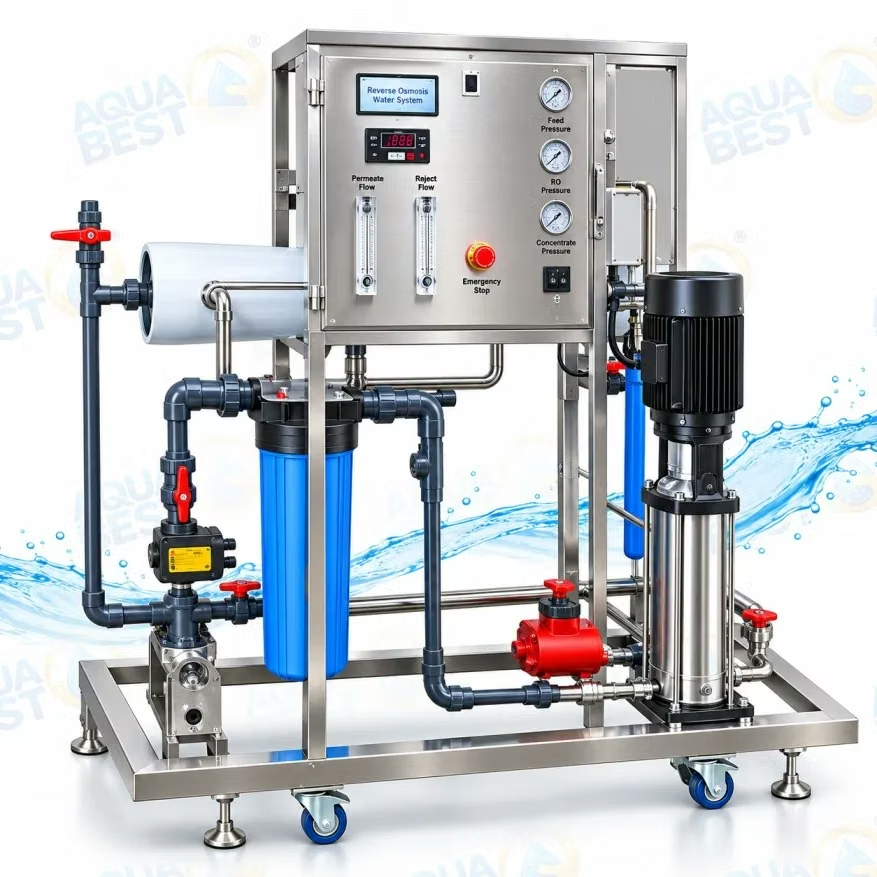
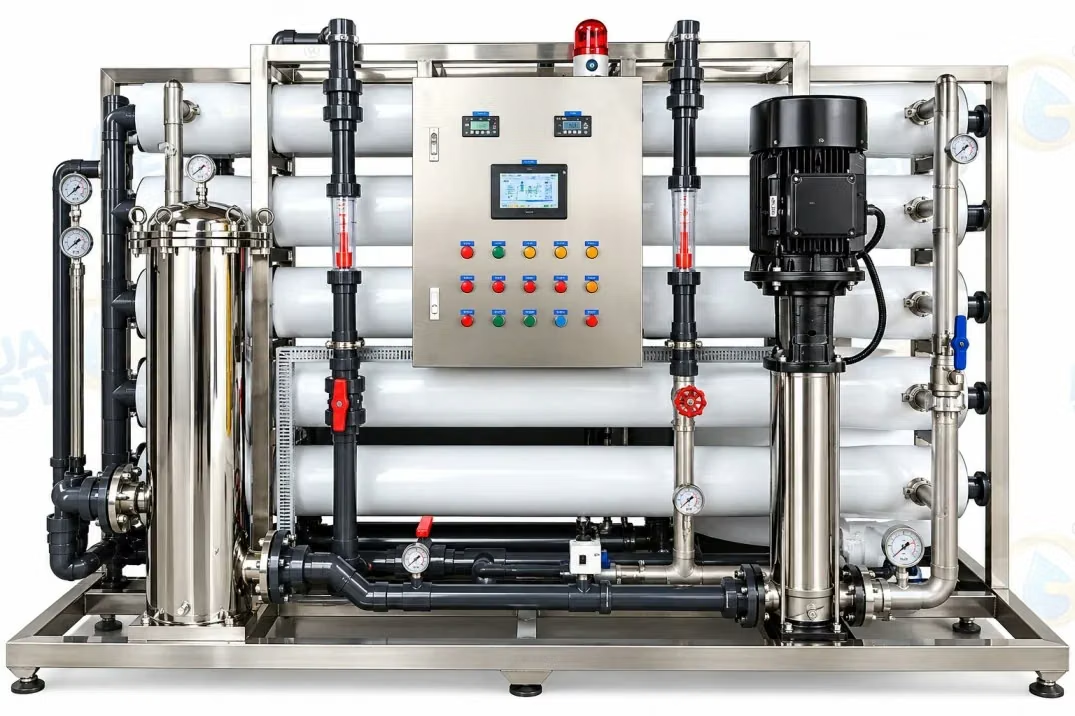
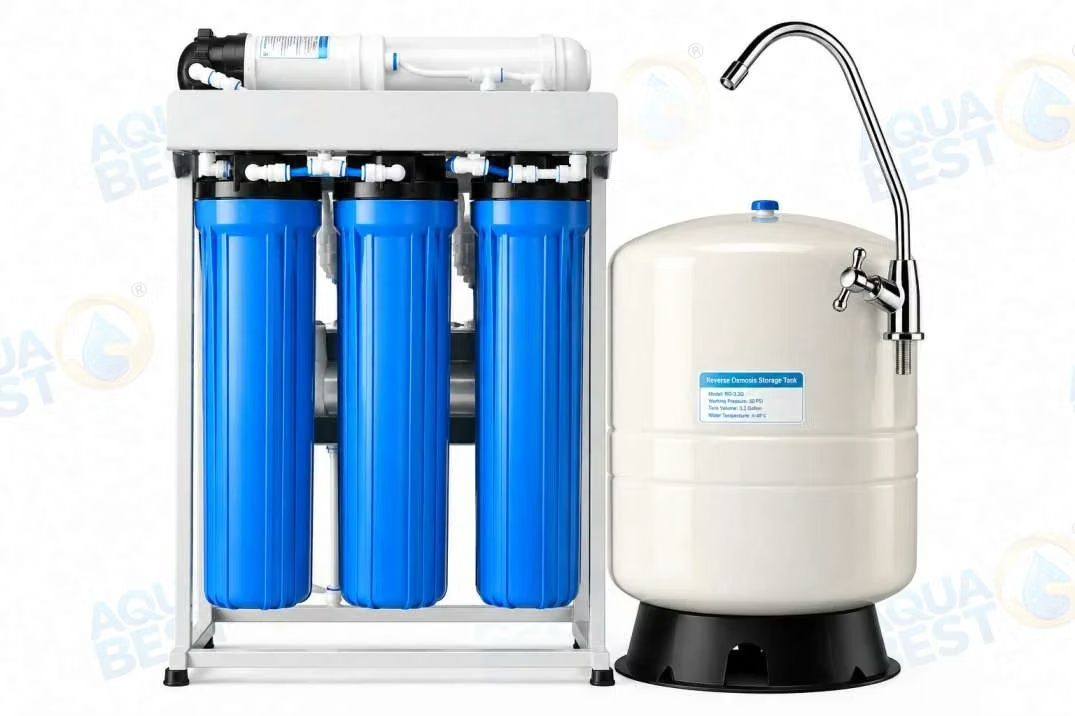
Examples in the current Aqua Best catalogue include: 1,500 GPD Brackish Water RO Plant; 10,000 GPD Brackish Water RO Plant; 100,000 GPD Brackish Water RO Plant; 12,000 GPD Brackish Water RO Plant; 15,000 GPD Brackish Water RO Plant; 20,000 GPD Brackish Water RO Plant; 250,000 GPD Brackish Water RO Plant.
These are catalogue configurations, not a promise of current stock or identical output at every site. Review the stated feed conditions, operating assumptions and complete system specification when comparing a nominal capacity with your requirement.
Review pretreatment and membrane selection
The feed analysis informs the assessment of filtration, scaling and other pretreatment requirements. Ask the proposal to identify the purpose of the selected stages and the operating assumptions.
Membranes and supporting equipment need to be compatible with the actual feed and conditions. Do not transfer the specification of another brackish-water installation without reviewing those differences.
Plan both product and concentrate routes
Identify the supply arrangement and how treated water will be stored or delivered. Also describe the proposed concentrate route and any site requirements that must be confirmed with the relevant project parties.
Confirm the supporting pumps, connections, drainage, power and instrumentation included in the proposal. These interfaces are part of the installation brief, not just details to resolve after buying the skid.
Allow for operation and service
Review access to filters, membrane housings and other service points. Ask for the operating records and maintenance information required for the selected plant, together with the replacement-part identification.
Keep the feed analysis and commissioning basis with the equipment record. They help explain the conditions used in selection when the source or operation changes later.
Example: a source changes over time
If the feed is expected to vary, explain that variation and share the available records with the analysis. A proposal based on a single stated condition may need further review before it represents the full operating requirement.
Ask what information is still needed and which feed conditions the quoted configuration addresses. Keep the design basis, operating requirements and service records with the installation. That makes a later change easier to discuss without assuming that every water source described as brackish requires the same treatment arrangement or replacement parts.
Request a feed-specific proposal
Aqua Best confirms the configuration and current price by quotation after reviewing the requirement.
- UAE site, source and recent water analysis.
- Intended product-water use and quality basis.
- Production, operating hours and delivery pattern.
- Existing treatment and storage.
- Product and concentrate connection arrangements.
- Site utilities, access and service scope.